







Corrugators must Prefer Transporters with 18% Forward Charge GST

Monthly Archives: November 2026

Corrugators must Prefer Transporters with 18% Forward Charge GST

Corrugated Box Manufacturers must Prefer to Use Transporters with 18% Forward Charge GST
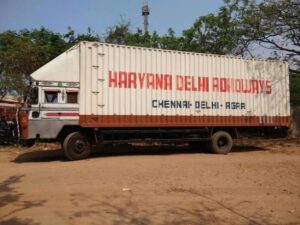
Advantage 1: The GST ITC on the Truck and Fleet Ecosystem Is Not Lost

Advantage 2: Eligible for GST Refund Under the Inverted Duty Structure (IDS)

Now in Detail

In manufacturing and B2B supply chains—especially across sectors like corrugated packaging, engineering, and industrial goods—freight is one of the highest recurring operational expenses. Yet, many procurement and accounts teams still treat Goods Transport Agency (GTA) GST selection as a routine clerical choice rather than a strategic tax and working-capital decision.
Author: Mr Sangeet Kr Gupta, FCA, FCMA, DISA, BCH, PGBMM
Following the GST rate rationalisation (where the earlier 12% forward charge slab for GTAs was aligned to 18% with full Input Tax Credit), businesses have two distinct tax paths when hiring a GTA:
  1. 5% GST (either under Reverse Charge Mechanism [RCM] or Forward Charge without ITC)

  2. 18% GST under Forward Charge Mechanism (FCM) with full ITC

While paying 5% under RCM feels deceptively lighter on paper, partnering with compliant transporters who have opted for 18% Forward Charge GST delivers major financial, operational, and working-capital advantages for your business.

Understanding the Two Models: 5% RCM vs. 18% Forward Charge

When a transporter operates under the 5% model (RCM or 5% Forward Charge), the GST law strictly bars the transporter from claiming Input Tax Credit (ITC) on their own capital expenditure and operating inputs. Because the transporter cannot claim GST paid on trucks, tyres, spare parts, insurance, or workshop repairs, that unrecovered tax becomes a hidden cost embedded inside your basic freight rate.
Conversely, when a transporter files Annexure V and opts for 18% Forward Charge GST (carrying the mandatory Annexure III declaration on their invoices), the entire tax chain becomes seamless and transparent.

Advantage 1: The GST ITC on the Truck and Fleet Ecosystem Is Not Lost

Under the 5% freight model, the tax credit chain breaks at the transporter’s doorstep:
  • Heavy Capital Outlay Tax Blocked: A commercial truck or container vehicle attracts substantial GST (e.g., 18% on commercial vehicles, chassis, and bodies). Under the 5% regime, the transporter absorbs this tax as a sunk capital cost.

  • Recurring Maintenance Tax Blocked: Every tyre replacement, major engine overhaul, spare part purchase, and fleet insurance policy carries 18% or 28% GST. Under 5% RCM, this tax is permanently lost to the ecosystem.

  • Hidden Inflation in Freight Rates: Rational transporters factor these blocked taxes into their per-kilometre or per-tonne freight quotes. You end up paying a higher base freight rate—and you get zero ITC on that hidden tax component.

When you choose a transporter billing under 18% Forward Charge:
  1. Full Credit Pass-Through: The transporter claims 100% ITC on their trucks, tyres, repairs, and fleet services, keeping their base freight pricing competitive and free of cascading tax costs.

  2. 100% Credit in Your Electronic Credit Ledger: The 18% GST charged on the transporter’s invoice reflects directly in your GSTR-2B, allowing you to claim full Input Tax Credit against your output GST liability without blockage.

  3. Zero Cash Outflow Under RCM: Under 5% RCM, you must pay GST in cash first via your Electronic Cash Ledger before claiming credit. Under 18% Forward Charge, you pay the supplier normally and adjust the 18% tax seamlessly through your credit ledger—preserving monthly liquidity.

Advantage 2: Eligible for GST Refund Under the Inverted Duty Structure (IDS)

For industries facing an Inverted Duty Structure (IDS)—such as corrugated box manufacturers (where finished boxes attract 5% GST while key inputs like kraft paper, starch, inks, and services attract 12% or 18% GST)—accumulated ITC is a major working-capital challenge.
Under Section 54(3)(ii) of the CGST Act, 2017 and Rule 89(5) of the CGST Rules, businesses caught in an inverted tax structure are entitled to claim a cash refund of unutilised Input Tax Credit.

Why 18% Forward Charge Freight Strengthens Your Refund Position

  • Unlocking Input Service ITC in IDS Refunds: Following the GST Council reforms (effective November 2026), accumulated ITC on eligible input services—including 18% Forward Charge GTA freight—is included in the Net ITC pool for Inverted Duty Structure refund calculations, rather than remaining trapped indefinitely in your electronic credit ledger.

  • 90% System-Based Provisional Refund: Under the streamlined GST refund architecture, eligible IDS refund claims filed via FORM GST RFD-01 qualify for up to 90% automated provisional sanction, rapidly converting your 18% freight tax credit back into liquid bank cash.

  • Clean GSTR-2B Audit Trail: Because 18% Forward Charge invoices auto-populate in GSTR-2B with valid supplier GSTINs and Annexure III declarations, refund officers can verify inward freight credits without RCM self-invoicing disputes or cash-ledger reconciliation queries.

Additional Operational & Compliance Benefits

1. Cash Ledger Outflow

  • 5% RCM Transporter: Mandatory monthly cash payment under RCM.

  • 18% Forward Charge Transporter: Nil — paid via normal vendor invoice and adjusted via ITC.

2. Self-Invoicing & Payment Vouchers

  • 5% RCM Transporter: Mandatory if the transporter is unregistered. >>>> Extra Work… and even mandatory IRN number generation…. more more.. and more possible penalties…

  • 18% Forward Charge Transporter: Not required — the transporter issues a valid Tax Invoice. Yes, normal business like normal vendors

3. Truck & Maintenance ITC

  • 5% RCM Transporter: Lost in the supply chain, which inflates your base freight rate.

  • 18% Forward Charge Transporter: Fully claimed by the GTA, keeping base freight transparent.

4. IDS Refund Eligibility

  • 5% RCM Transporter: Often triggers officer scrutiny on cash-paid RCM reversals.  >>>> Lost opportunity… many ETO’s GST officers do not allow… ( controversial topic )

  • 18% Forward Charge Transporter: Smoothly verified via GSTR-2B for Inverted Duty Structure refund claims. Yes, normal business like normal vendors

5. Audit & Notice Risk

  • 5% RCM Transporter: High risk of missed RCM entries and 18% interest penalties. >>>> YES, RISK is there, no doubt.. those using Finsys ERP.. still have this automation, but but Softwares even Tally / Busy with normal JV working cannot protect you here..

  • 18% Forward Charge Transporter: Low risk — follows standard invoice matching in GSTR-2B.   Yes, normal business like normal vendors

Practical Checklist Before Onboarding an 18% GTA

  1. Verify Annexure V Filing: Collect a copy of the transporter’s filed Annexure V acknowledgement confirming their opt-in for Forward Charge.

  2. Check Invoice Declaration: Ensure every freight bill carries the prescribed Annexure III declaration stating they have opted to pay tax under Forward Charge.

  3. Negotiate Base Freight Separately: Since the transporter recovers ITC on trucks, tyres, and repairs, negotiate your base freight rate excluding embedded tax overheads.

Further Reading & Reference Resources

Knowledge Partner : Finsys ERP Team

Some Frequently Asked Questions on ITC on Freight 18% vs 5%


  • Q: Is Input Tax Credit (ITC) available on 18% Forward Charge GST paid to a transporter?A: Yes. When a Goods Transport Agency (GTA) opts for 18% Forward Charge by filing Annexure V and issues a valid tax invoice with the Annexure III declaration, the recipient business can claim 100% ITC in GSTR-2B.

  • Q: Why is 18% Forward Charge GST better than 5% RCM for manufacturers?A: Under 5% RCM, transporters cannot claim ITC on trucks, tyres, and repairs, so they build those hidden tax costs into higher base freight rates. Under 18% Forward Charge, the transporter claims full fleet ITC, keeping base freight transparent while eliminating monthly RCM cash outflows.

  • Q: Can accumulated ITC on 18% GTA freight be claimed as a refund under the Inverted Duty Structure?A: Yes. For sectors facing an inverted tax structure (such as corrugated box manufacturers), accumulated ITC on eligible input services like 18% Forward Charge freight is eligible for refund claims via FORM GST RFD-01 under Section 54(3) of the CGST Act.


A Heart for Packaging

At Finsys, we are more than just an ERP provider— we are an intelligent technology partner deeply rooted in the corrugated packaging and mono-carton industry.

We have a genuine heart for packaging manufacturers, and our mission goes beyond automating your factory floor. Whether it is reel-to-sheet costing, dispatch planning, or navigating complex GST and compliance decisions like freight ITC, we stand beside box makers with practical guidance that protects your margins and keeps your business ahead.

We even help clients in their GST Refund calculations, online applications, and even accounting outsourcing in some cases.

Finsys and Corrugation Packaging… Made for Each Other

Corrugated Box Packaging, Corrugation Industry, Mono Carton Packaging, GTA GST, 18% Forward Charge GST, 5% RCM GST, Input Tax Credit, Inverted Duty Structure, GST Refund RFD-01, Finsys ERP, Packaging ERP Software, Annexure V GTA, Freight ITC, Manufacturing GST Compliance


Smart Job Planning & Machine Loading in Corrugation | Finsys ERP

Smart Job Planning & Machine Loading: Transforming Corrugation Plants with Finsys ERP

In the fast-paced world of the packaging and corrugation industry, maximizing machine output and minimizing downtime is the ultimate goal. When visiting exhibitions like IndiaCorrex, the most common question industry leaders ask is: “How can an ERP help us with effective job planning?”

With Web Finsys ERP, we have introduced highly dynamic screens for Smart Job Planning (also known as Machine Loading) that directly tackle this challenge. By adopting these tools, packaging manufacturers can dramatically increase plant efficiency and take complete control of their production floors.

What Makes Job Planning in Finsys ERP So Powerful?

Traditional scheduling relies heavily on manual estimates and guesswork, which often leads to wasted machine capacity and unnecessary changeover times. Finsys ERP replaces this with an intelligent, data-driven approach.

Here are the game-changing features and benefits of our Machine Loading module:

1. Dynamic Sorting for Maximum Efficiency

Finsys ERP offers a dynamic screen that allows production managers to group and sort multiple jobs based on various critical parameters, including:

  • Similar GSM (Grams per Square Meter)

  • Similar Color configurations

  • Linear Meter requirements

  • Approaching delivery dates

By grouping similar single-size jobs together, you drastically reduce machine changeover time and significantly decrease equipment downtime.

Corrugation

2. Advanced Shift-Wise Scheduling

Scheduling isn’t just about knowing what to do today; it’s about micro-managing your timeline. With Finsys ERP, you can plan days in advance. For instance, if you are planning on the 16th, you can schedule precisely what will run on the 17th, 18th, and 20th. Furthermore, you can assign jobs down to the micro-level:

  • What runs in Shift A vs. Shift B

  • The exact chronological sequence of jobs within a specific shift (Job 1, Job 2, Job 3, etc.)

3. Automated Store Requests & Real-Time QR Material Issue

The magic of Finsys ERP happens behind the scenes. As soon as the production team finalizes the job plan, the system automatically sends an alert to the raw material stores. When the time comes to run the job, operators can simply scan the QR codes on the paper reels. The exact material is issued in real-time against that specific plan, ensuring zero material wastage and flawless inventory tracking.

4. Tracking True Machine Utilization

High-speed machines can run at 100 to 200 meters per minute. But are you utilizing their full potential, or are they averaging only 40 to 60 meters per minute?

Industry pioneers like PR Packaging and KCL are already using our system to track every single minute of their shifts. Whether it’s a 480-minute or 720-minute shift (including overtime), Finsys ERP gives you an exact percentage of your machine loading. If your machine is only loaded at 40%, the software flags it, allowing you to load it up to 80% or 100% capacity. Every minute is accounted for, leaving no room for operational blind spots.

Advance Planning for Ultimate Peace of Mind

Ultimately, the goal of Finsys ERP is to give business owners and plant managers total peace of mind. With the ability to securely lock in advance planning for the next 10 days, you don’t have to worry about daily scheduling chaos. You can focus on what truly matters: growing your business.

Ready to maximize your machine utilization and reduce downtime?

Website :- https://finsys.co.in/

Youtube:- https://www.youtube.com/@SangeetGuptaFinsysERPSoftware


Additional Sources of Information

Useful Corrugation Industry Resources


ERP Software in Tanzania | Cloud ERP for SMEs

ERP Software in Tanzania | Finsys Cloud ERP for Manufacturing in MSME’s

A big milestone for Finsys ERP! Watch the video on this page,  how our team achieved a complete, successful ERP implementation in Dar es Salaam, Tanzania in just a single 30-day visit.

Key Highlights of the Implementation:

• Rapid adoption of barcode scanning & “Issue by Scan” in production
• End-to-end coverage: Purchase, Sales, Stores, Accounts, Production & QC
• Mobile App approvals for management on the go
• Automated daily reports via Auto-mail
• Document attachments at MRN & Purchase Order creation

Mission

From India to Africa (Tanzania, Nigeria, Egypt, Angola), Finsys ERP continues to power manufacturing and packaging industries globally.

ERP for MSME | Corrugated Packaging | Components | Equipments | Machines


Currently, Finsys ERP Tanzania is in implementation as a good cloud-based manufacturing ERP designed specifically for SMEs in Dar es Salaam, Dodoma, Arusha, and Mwanza. It has been a good success

Therefore, we offer our services to help you streamline production, inventory, costing, and accounts seamlessly. in your company too.

Ultimately, Finsys is your affordable and reliable alternative to SAP, Oracle NetSuite, and Odoo, built to power industrial growth across East Africa.

Tanzania’s Industrial Future – Finsys ERP Software Implemented at Tanzania

First of all, Tanzania is rapidly building a robust, diversified economy. As a result, it has become a prime destination for modern manufacturing and industrial investment. Furthermore, the country’s vision is strongly focused on expanding non-agricultural sectors and boosting private-sector growth. Because of this, Tanzanian factories need digital systems to scale with discipline and complete control.

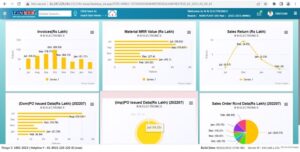
dashboard-2023-erp software finsys Graphical

Why Tanzania Matters for Manufacturing

Strategically, located on Africa’s east coast, Tanzania serves as a major trade and logistics gateway for multiple landlocked countries via the Port of Dar es Salaam. Meanwhile, as investments in manufacturing and logistics grow, local businesses need smart systems. Specifically, they must improve planning, coordination, costing, and enterprise-wide execution.

Key Industrial Areas in Tanzania

Undoubtedly, Tanzania’s industrial growth is driven by major economic zones. For instance, Dar es Salaam is the primary commercial and logistics hub with excellent port access. Additionally, Arusha is known for its light manufacturing and agro-processing industries. Similarly, Mwanza serves as a vital center for cross-border trade around Lake Victoria. Consequently, these clusters attract businesses that require a single, connected flow for procurement, production, quality control, and management reporting.

Nonferrous Casting And Machining Industries

Finsys ERP: Trusted in African & International Markets

With decades of experience, Finsys ERP is a specialized, ready-to-use manufacturing platform for mid-sized and SME businesses. Moreover, our global footprint spans the UAE, Saudi Arabia, the USA, and the wider African region, including Egypt. Thus, this international presence assures Tanzanian businesses that Finsys truly understands multi-location and cross-border operational realities.

INDUSTRIES

Industries We Serve

Generally, Tanzanian industrial companies prefer an ERP that already understands their unique process flows. Therefore, Finsys provides specialized, ready-to-use solutions for various sectors. To illustrate, our coverage includes Plastic and Rubber moulding, Corrugation packaging, Laminates, Paints, and Machinery manufacturing.

india-Corr-Expo-ice-logo-common

Our Implementation Strategy

Above all, we believe in a practical, execution-oriented approach. In fact, our phased implementation reduces disruption and seamlessly transitions your factory from manual operations to a single live system. To achieve this, the process includes studying your business, configuring modules, migrating data, and going live with dedicated support.

Powered by Oracle Cloud Servers

Importantly, Finsys ERP runs on Oracle Cloud, delivering enterprise-grade performance, security, and resilience. For businesses in Tanzania, this infrastructure means reliable application performance and stronger data protection. Consequently, when your ERP is backed by robust infrastructure, management can confidently support growth and remote access without bottlenecks.

Transform Your Business Today

In conclusion, for Tanzanian industrial businesses, the goal is clear: gain control, speed, visibility, and economy. So, streamline your operations with our Cloud ERP for SMEs. Ultimately, we offer a powerful, cost-effective, and reliable alternative to SAP, Oracle NetSuite, and Odoo.

Still deciding ?

Start with these Links from our website :

1. Finsys ERP in Africa  (Angola, Congo and Nigeria )—

barcode success in packaging https://finsys.co.in/finsys-erp-africa-packaging-labels-software Anchor text: See Finsys ERP already running in African packaging plants Blurb: See how Finsys ERP already runs in African packaging plants — Android barcode scanning, reel tracking and instant stock accuracy, proven in Nigeria, Angola and beyond.

2. Live cloud ERP demo in a browser

https://finsys.co.in/cloud-based-erp-aws-amazon-chrome-demo Anchor text: Watch Finsys ERP running live on the cloud Blurb: Watch Finsys ERP run live on cloud servers through an ordinary browser — the same setup your Dar es Salaam team would use, with no local server headaches.

3. MRP and MRP-2 explained

https://finsys.co.in/material-requirement-planning-mrp-mrp2-best-mrp-software Anchor text: How MRP turns your forecast into a purchase plan Blurb: Material planning is where Tanzanian factories quietly lose money. This page explains MRP and MRP-2 in plain language, showing how forecasts become purchase and production plans.

4. Implementation steps and go-live plan

https://finsys.co.in/implementation-steps-stages-plan-of-action-finsys-erp-page Anchor text: Exactly how a Finsys go-live runs, stage by stage Blurb: Before you commit, see exactly how a Finsys go-live runs — six documented stages, from freezing requirements to parallel live, so nothing about the timeline surprises you.

5. ERP for flexible packaging and laminates

https://finsys.co.in/erp-software-for-flexible-packaging-and-laminates Anchor text: ERP already configured for flexible packaging and laminates Blurb: If you convert flexible packaging, laminates or pouches, this page shows the Finsys template already built around your machines, reel widths, wastage norms and costing methods.


6. ERP Implementation at Egypt, Africa 

Egypt, ERP Software at Egypt, Video by Puneet Sir, front of Pyramids


Contact us at Corporate[at] Finsys.in

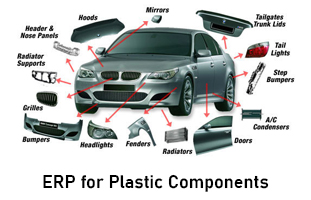
Another Plastic Moulded Component manufacturer Shifts to Finsys ERP

Another reknowned Automotive Plastic Components Manufacturer  Digitizes Operations with Finsys ERP

Based in Haryana : Three Plants : Faridabad, Manesar, Sonepat

In the fast-paced world of automotive manufacturing, precision and speed are critical. In addition, reducing material waste is essential for long-term survival. Therefore, a leading automotive plastic injection moulding manufacturer in Haryana, India, decided to upgrade its factory. Consequently, the company has officially digitized its complete manufacturing operations by implementing Finsys ERP.

The enterprise is a certified supplier to major Automobile OEMs and Tier-1 OESs across North India. Specifically, it specializes in engineering high-tolerance, custom plastic injection-moulded components. However, rapid business expansion brought new operational challenges. Moreover, automotive buyers started demanding stricter quality audits. As a result, the company adopted Finsys Manufacturing ERP to build a connected, paperless, and data-driven shop floor.

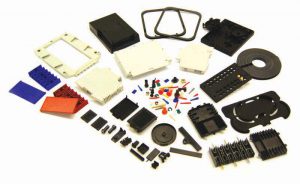
Plastic Moulded Components


The Operational Background & Industry Challenges

Modern automotive manufacturing leaves no room for operational errors. Prior to deploying Finsys ERP, the Haryana plant faced common industry bottlenecks.

  • Complex Machine & Mould Scheduling: The plant manages a large range of injection moulding machines with multi-cavity moulds. Previously, this setup required constant manual oversight. As a result, the team faced frequent scheduling conflicts and lost overall capacity.

  • Lack of Regrind & Scrap Visibility: Tracking raw polymer granules versus regrind material was difficult. Therefore, calculating precise batch costs became a major challenge for the team.

  • Strict OEM Traceability Mandates: Tier-1 automotive OEMs require complete lot traceability. For instance, they demand tracking from the raw resin batch to the final part serial number.

  • Delayed Shop-Floor Data: The factory relied heavily on paper job cards. Consequently, managers faced serious delays in tracking cycle times, setup losses, and machine downtime.


Key Operational Transformations Powered by Finsys ERP

Finsys provided the enterprise with an end-to-end ERP Solution. This system is engineered specifically for the plastic moulding supply chain.

1. Advanced Machine & Tooling Management

First, the software tracks mould life based on real-time shot counts. Therefore, the team can perform proactive maintenance and prevent tool breakage during production runs. In addition, the system dynamically matches job orders with machine tonnage and cavity counts. As a result, the plant maximizes its Overall Equipment Effectiveness (OEE).

2. Polymer Stores & Raw Material Batch Control

Second, the warehouse uses barcode scanners to streamline material inwarding and issuing. Consequently, raw material allocation is 100% accurate. Furthermore, the system factors runner weights and regrind ratios directly into the Bill of Materials (BOM). Thus, the company controls raw material costs while keeping part quality high.

3. Real-Time Production & Quality Assurance

Third, digital production entries have replaced paper tracking entirely. Therefore, operators capture machine output and setup losses in real time. Moreover, the system links dimensional and drop tests directly to the dispatch clearance workflow. As a result, defective lots never leave the factory floor.

4. Financial Integration & Executive Dashboards

Finally, the platform connects Purchase Orders, Production, Sales Invoicing, and GST filings into one database. Furthermore, real-time MIS dashboards give leadership instant visibility into plant OEE, machine hour rates, and daily cash flow.


Plastic Moulded Components

Key Business Outcomes & ROI

After the successful rollout of Finsys ERP, the manufacturer achieved major operational gains:

  • 100% Complete Lot Traceability: The factory now tracks material forward and backward instantly during OEM quality audits. … Available in 9 seconds from the word “Start”

  • 20% Reduction in Machine Downtime: Proactive mould servicing and faster job changeovers minimized unplanned stoppages…. all things are transparent.

  • Enhanced Profit Margin Visibility: The team gained precise unit-level product costing by accurately tracking scrap recovery and power usage. Yes.. this works.

  • Faster OEM Dispatch Compliance: Automated barcoded dispatch labels now ensure full compliance with OEM delivery standards. … Systems speak for themselves

Useful Links

1. ERP Software for Plastic Moulded Components

URL: https://finsys.co.in/industries/auto-components-vertical/erp-software-for-plastic-moulded-components
Discover how Finsys ERP integrates injection moulding, production planning, mould life, quality, stores, costing, sales, and accounts into one powerful platform for plastic component manufacturers.

2. ERP for Auto Components

URL: https://finsys.co.in/industries/auto-components-vertical
See how Finsys supports automotive component manufacturers with machine, mould, BOM, WIP, quality, traceability, procurement, dispatch, and finance controls for OEM and Tier-1 compliance.

3. Theoretical vs Actual Material Consumption

URL: https://finsys.co.in/theoretical-vs-actual-consumption-moulding-erp
Learn how Finsys compares standard BOM consumption with actual material issued, helping moulding plants control resin costs, regrind, wastage, and product-level profitability accurately.


Some more Useful Resources

  • CII Haryana — Explore CII insights on Haryana’s automobile, auto-components, MSME, and manufacturing ecosystem—highly relevant for plastic moulding suppliers serving OEMs across Gurugram, Manesar, and Faridabad.
  • PlastIndia Industry Status Report — Access PlastIndia’s industry status report for trends in plastics manufacturing, processing technologies, sustainability, exports, and innovation shaping India’s moulding and polymer components sector.
  • PLASTINDIA 2028 — Discover PLASTINDIA 2028, a major platform for injection moulding machinery, moulds, automation, raw materials, and digital manufacturing solutions for India’s growing plastics industry.

ERP Software for Printing & Packaging Companies | Finsys ERP

ERP Software for Printing & Packaging Companies

Screenshot


Run Your Packaging Business With Complete Control

ERP for flexible-packaging

Finsys ERP is designed for printing, packaging, corrugation, flexible packaging, labels, cartons, and converting businesses. It brings sales, planning, production, inventory, procurement, quality, dispatch, costing, and accounts into one integrated system.

Whether you manufacture folding cartons, corrugated boxes, labels, flexible packaging, rigid boxes, or specialty printed products, Finsys helps you improve delivery performance, control material costs, reduce wastage, and maintain profitability.

Built for Packaging & Print Operations

Packaging businesses handle multiple products, customer-specific specifications, variable order quantities, fast-changing designs, and tight delivery schedules. Finsys ERP is built to manage these complexities without relying on disconnected spreadsheets and separate systems.

  • Manage customer enquiries, quotations, approvals, sales orders, and order revisions
  • Create and track job cards, work orders, production plans, and machine-wise schedules
  • Control raw material, semi-finished goods, finished goods, dies, plates, and packaging stock
  • Capture production output, machine efficiency, rejection, wastage, rework, and yield
  • Track job-wise material consumption, labour, overheads, and actual manufacturing cost
  • Manage quality checks, inspection records, customer specifications, and approval workflows
  • Generate invoices, delivery challans, e-way bills, e-invoices, and GST-compliant documents
  • Monitor receivables, credit limits, outstanding payments, and customer profitability

Key ERP Modules

Business Area What Finsys ERP Helps You Do
Sales & Estimation Prepare quotations, manage customer specifications, track approvals, convert enquiries into orders, and monitor order status
Planning & Production Plan jobs, allocate machines and resources, issue job cards, track progress, and monitor planned versus actual production
Material Management Control paper, board, ink, adhesives, films, foils, laminates, corrugated material, and packaging consumables
Inventory & Stores Maintain batch-wise, location-wise, and grade-wise stock; manage issues, returns, scrap, and minimum-stock alerts
Quality Control Record inspection results, manage customer specifications, track rejections, rework, and corrective actions
Costing & Profitability Calculate job-wise cost, compare estimates with actuals, track wastage, and identify profitable products and customers
Dispatch & Logistics Manage packing, dispatch planning, delivery challans, transport documents, e-way bills, and customer deliveries
Finance & Compliance Integrate production and inventory data with accounting, GST, TDS, receivables, payables, and statutory reporting
Management Dashboards Review orders, capacity, material availability, production efficiency, wastage, delivery delays, receivables, and margins

Designed for Multiple Packaging Products

Finsys ERP supports businesses manufacturing a wide range of printed and packaging products, including:

  • Folding cartons and mono cartons
  • Corrugated boxes and corrugated packaging
  • Flexible packaging and laminated pouches
  • Labels, stickers, tags, and shrink sleeves
  • Rigid boxes, luxury packaging, and gift packaging
  • Printed cartons, blister packs, and display packaging
  • Eco-friendly, recyclable, and sustainable packaging products
  • Custom-designed packaging for FMCG, pharma, food, cosmetics, electronics, and retail brands

Improve Production Efficiency

Production visibility is critical in packaging manufacturing. Finsys ERP gives your team a clear view of every job from order receipt to dispatch.

  • Track each job through design, pre-press, printing, cutting, folding, pasting, lamination, die-cutting, and finishing
  • Allocate jobs to machines, shifts, operators, and work centres
  • Monitor machine utilisation, downtime, setup time, and production output
  • Capture material issue and consumption against each job
  • Record rejection, wastage, rework, and scrap with reasons
  • Compare planned quantity, produced quantity, rejected quantity, and dispatched quantity
  • Identify bottlenecks before they affect customer delivery dates

Control Material Cost and Wastage

Material is one of the largest cost components in printing and packaging. Finsys ERP helps you monitor consumption, identify losses, and improve cost control.

  • Maintain item-wise, grade-wise, size-wise, and supplier-wise material records
  • Issue materials against production jobs and track actual consumption
  • Compare standard consumption with actual consumption
  • Monitor trim loss, printing wastage, conversion loss, and rework
  • Track scrap, damaged material, and reusable stock
  • Calculate job-wise material cost and identify high-cost products
  • Improve purchasing decisions with supplier, rate, and consumption analysis

Deliver on Time, Every Time

Late deliveries can affect customer retention and profitability. Finsys ERP helps your sales, planning, production, and dispatch teams work from the same real-time information.

  • Track every order from enquiry to invoice and dispatch
  • Identify pending approvals, material shortages, production delays, and quality holds
  • Plan capacity based on machine availability and order priority
  • Monitor delivery dates and pending dispatches
  • Generate customer-wise, product-wise, and order-wise status reports
  • Reduce follow-ups through automated alerts and exception reports

Financial Control With Operational Data

Finsys ERP connects shop-floor activity with finance, giving management accurate and timely business information.

  • Job-wise and product-wise profitability analysis
  • Customer-wise sales, outstanding, and margin reports
  • Material cost, labour cost, overhead cost, and total production cost
  • Budget versus actual cost analysis
  • GST-ready invoices, e-invoices, e-way bills, and statutory reports
  • Receivables ageing, credit control, and collection follow-up
  • Multi-location, multi-warehouse, and multi-company support

Management Dashboard

Get a single view of your business performance through role-based dashboards and reports.

  • Sales order backlog and order status
  • Production plan versus actual output
  • Machine-wise and shift-wise efficiency
  • Material consumption and wastage
  • Quality rejections and rework
  • Pending dispatch and delivery delays
  • Customer outstanding and receivables ageing
  • Job-wise profitability and margin analysis

Why Packaging Businesses Choose Finsys ERP

  • Industry-focused ERP for printing, packaging, and converting operations
  • Integrated sales, planning, production, inventory, quality, dispatch, and accounts
  • Job-wise costing and profitability visibility
  • Better control over material consumption, wastage, and scrap
  • Real-time production and delivery tracking
  • GST, e-invoice, e-way bill, and compliance-ready processes
  • Scalable for single-unit and multi-location manufacturing businesses
  • Configurable workflows for different packaging products and production processes

Ideal For

Finsys ERP is suitable for:

  • Printing and packaging manufacturers
  • Corrugated box manufacturers
  • Flexible packaging manufacturers
  • Label and sticker manufacturers
  • Carton and folding-box manufacturers
  • Rigid box and luxury packaging manufacturers
  • Converters, printers, and packaging solution providers
  • Businesses supplying packaging to FMCG, pharma, food, cosmetics, retail, and e-commerce companies

Frequently Asked Questions

Can Finsys ERP handle customer-specific packaging specifications?

Yes. You can maintain customer-wise product specifications, artwork references, sizes, materials, colours, finishing requirements, and approval details.

Can the ERP track job-wise production and costing?

Yes. Finsys ERP supports job cards, material issues, production entries, labour and overhead allocation, wastage, and job-wise profitability analysis.

Does it support multiple products and production processes?

Yes. The system can be configured for printing, corrugation, die-cutting, lamination, folding, pasting, converting, finishing, and other packaging processes.

Can Finsys ERP manage raw material and finished-goods inventory?

Yes. It supports raw material, packaging material, semi-finished goods, finished goods, scrap, dies, plates, and other production-related stock.

Is the ERP suitable for multi-location companies?

Yes. Finsys ERP supports multi-company, multi-plant, multi-warehouse, and multi-location operations.

Does it help with GST and statutory compliance?

Yes. The system supports GST-compliant billing, e-invoicing, e-way bills, TDS, and standard accounting and compliance reports.

Call to Action

See How Finsys ERP Can Improve Your Packaging Operations

Request a personalised demo to understand how Finsys ERP can help your business control production, reduce wastage, improve delivery performance, and increase profitability.

Book a Demo | Request a Quotation | Speak to an ERP Consultant


Suggested WordPress Blocks

Use this structure in Elementor, Gutenberg, or your page builder:

  1. Hero section: Headline, subheading, primary CTA button — “Book a Demo”
  2. Intro paragraph: “Run Your Packaging Business With Complete Control”
  3. “Built for Packaging & Print Operations” — bullet list
  4. “Key ERP Modules” — table
  5. “Designed for Multiple Packaging Products” — bullet list
  6. “Improve Production Efficiency” — bullet list
  7. “Control Material Cost and Wastage” — bullet list
  8. “Deliver on Time, Every Time” — bullet list
  9. “Financial Control With Operational Data” — bullet list
  10. “Management Dashboard” — bullet list
  11. “Why Packaging Businesses Choose Finsys ERP” — bullet list
  12. “Ideal For” — bullet list
  13. FAQ accordion
  14. Final CTA section with three buttons: Book a Demo, Request a Quotation, Speak to an ERP Consultant

The source company’s site positions its packaging business around premium, custom, and eco-conscious print and packaging solutions for domestic and international brands, which is why the page focuses on customisation, sustainability-ready packaging, multi-industry supply, and premium packaging capabilities.[colorplast]