











Forward-Thinking Glass Manufacturer in Punjab, Selects Finsys ERP
Finsys ERP has been selected by a progressive glass manufacturing company based in Punjab for comprehensive digital transformation. This engagement reinforces the growing confidence that innovative glass manufacturers across India place in Finsys—a robust, manufacturing-focused ERP specifically built to handle real shop floor complexity, precision production demands, and quality-conscious customers requiring consistency and reliability.
The new customer operates in the specialized glass manufacturing space, producing a wide range of glass products including bottles, containers, flat glass, and custom glassware for beverage, pharmaceutical, food, and industrial sectors. As their business scales rapidly, reliance on spreadsheets and fragmented systems has become a major bottleneck for production monitoring, inventory control, dispatch efficiency, and accurate management reporting.
Punjab’s Strong Glass Manufacturing Sector
Punjab has established itself as a significant hub for glass manufacturing in India, with a strong presence of glass container manufacturers, bottle makers, and flat glass producers. The state’s industrial infrastructure, skilled workforce, and proximity to key markets make it a strategic location for glass manufacturing units looking to expand operations.
This new customer is a growth-focused glass manufacturing unit supplying high-quality glass products to prominent beverage companies, pharmaceutical manufacturers, food processors, and industrial clients. Their production capabilities span multiple product lines including colored and clear glass bottles, pharmaceutical vials, food jars, and customized glass containers designed to meet specific customer requirements.
In this precision-driven industry, quality consistency, on-time delivery, and cost control directly impact margins and customer retention. To achieve operational excellence, manufacturing operations need tight coordination with complete visibility from raw material procurement through final dispatch.
The Core Challenges
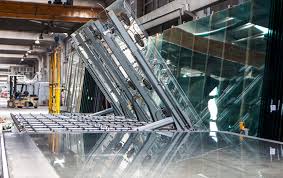
Glass manufacturing is a capital-intensive, process-oriented industry facing unique operational challenges:
- Batch Production Complexity – Managing multiple glass batches simultaneously with different compositions, colors, and specifications
- Real-time Monitoring Gaps – Lack of visibility into furnace operations, molding, annealing, and quality status
- Inventory Management – Difficulty tracking raw materials (silica sand, soda ash, lime) and managing finished goods across multiple product lines
- Quality Consistency – Manual quality checks without complete traceability from batch to finished product
- Delivery Pressure – Difficulty meeting tight OTIF commitments without integrated production and dispatch planning
- Cost Control – Inability to track manufacturing costs accurately by product, batch, and customer
Why Finsys ERP Was Selected
Finsys ERP has successfully powered multiple glass manufacturing operations, including bottle manufacturers, container producers, and specialty glass units. It is recognized for its capability to handle complex, process-oriented manufacturing with batch tracking, multi-stage production control, detailed material management, and stringent quality compliance.
The Punjab customer evaluated Finsys ERP on three critical dimensions:
Industry Expertise – Proven depth in glass and process manufacturing with understanding of batch production, furnace operations, and quality requirements specific to glass making.
Implementation Track Record – Demonstrated success in similar glass manufacturing plants across India with quick time-to-value and minimal production disruption.
Scalability & Roadmap – A system that grows with business needs, supports new product lines, and maintains compliance with glass industry standards and quality regulations.
Finsys ERP delivered on all three fronts: a comprehensive solution deployable in a structured manner, with strong post-implementation support and the flexibility to accommodate production expansion and new product development.
Implementation Scope
Sales and Order Management
- Enquiry tracking and quotation management for different glass product categories
- Order entry with detailed specifications: glass color, thickness, finish, quantity, delivery timeline
- Real-time order status visibility for sales, customer service, and production planning teams
Production Planning and Shop Floor Control
- Batch-wise production scheduling with furnace capacity planning
- Real-time monitoring of molding, annealing, and finishing processes
- Work order generation and WIP (Work in Progress) tracking across production lines
- Support for multiple product variants with different specifications
- Daily production dashboards showing throughput, yield rates, and quality metrics
Raw Material and Inventory Management
- Automated Material Requirement Planning (MRP) for glass batch materials: silica sand, soda ash, lime, colorants, additives
- Supplier management and procurement tracking for raw materials
- Batch-level and location-based inventory control to optimize stock levels
- Waste and breakage tracking with batch-wise yield analysis
Quality Management and Compliance
- Quality checkpoints integrated at molding, annealing, and inspection stages
- Batch and order-level traceability for complete quality audit trails
- Automated quality alerts for deviations in specifications (thickness, color, clarity)
- Integration with glass industry quality standards and certifications
Logistics, Dispatch, and OTIF Excellence
- Integrated dispatch planning with automatic shipping documentation
- Order fulfillment tracking against on-time, in-full (OTIF) commitments
- Real-time shipment tracking and delivery confirmation
- Seamless integration with accounts for accurate billing
Finance and Accounts Integration
- Real-time operational data flowing into financial accounting
- Manufacturing cost tracking by product, batch, and production line
- Costing analysis with contribution margin insights by customer and product
- Statutory compliance and GST-ready invoicing
Strengthening Finsys Position in Glass Manufacturing
With this new implementation, Finsys reinforces its position as the preferred ERP partner for glass and process manufacturing industries across India. Our team is fully committed to a smooth, phased implementation that delivers rapid benefits and establishes a strong, data-driven foundation for sustained growth.
Finsys ERP continues to empower ambitious glass manufacturers and process-oriented industries, guiding them from scattered systems to an integrated digital backbone that drives operational excellence, quality consistency, and profitability.