


Corrugation Special in July issue of PrintWeek Finsys

Category Archives: Recent News

Corrugation Special in July issue of PrintWeek Finsys

Finsys ERP is proud to be associated with Printweek

Corrugation Special in July issue of PrintWeek : Finsys

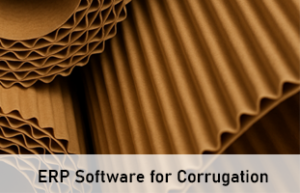
The July 2026 issue of PrintWeek takes a peek into the eight-million MT corrugation market in India.

The July 2026 issue of PrintWeek focuses on the corrugation industry


Writing the editorial for the Corrugation Special, which is the highlight of the issue, Rahul Kumar of PrintWeek writes, “India is witnessing unprecedented demand for corrugated packaging. Every online order, pharmaceutical shipment, fresh produce consignment, industrial component, or consumer electronics product requires reliable and sustainable packaging. Government initiatives such as Make in India, Production Linked Incentive (PLI) schemes, rising exports, and improved logistics infrastructure are further accelerating the demand for high-performance corrugated packaging. Unlike mature markets, India still has significant headroom for growth. As manufacturing expands and organised retail penetrates deeper into tier-II and tier-III cities, corrugated packaging consumption is expected to rise steadily. The future of the industry is being driven by multiple high-growth industries simultaneously.”

A sector that spent decades in the shadows of small-scale reservation is now navigating the turbulence of overcapacity, Chinese dominance, and thin margins. Yet pockets of manufacturing are quietly redefining what is possible. Manish Patel of SIPM shares his expert opinion in The Big Read section.

To the insider, the corrugated packaging landscape reveals a complex architecture, a sector in the midst of a profound structural transformation, writes Pankaj Shah of Supack International.

Rahul Kumar visits Lucknow-based Amber Packagers, where managing director Wafa Abbas explains why automation, quality and disciplined investment are shaping the company’s next phase of growth.

Volatility in kraft paper prices is a challenge. It has a direct impact on manufacturing costs and profitability, say Anantha Shayana and Pramod Shayana of Best Corrugators, in an interview with Rahul Kumar

At Corrucase, the goal is to become a packaging partner rather than just a packaging converter, says Ayush Khetan, director, Corrucase, in an interview with Rahul Kumar.

Timely maintenance of all machines and keeping them in top-notch working condition is necessary to improve the efficiency of the production process, Navin Kumar Motani of Vaishali, Hajipur-based Excel Paper Packaging, tells Rahul Kumar.

To build a globally competitive, future-ready corrugated packaging plant today, your capital allocation must shift away from traditional metrics and focus on agility, intelligence, and circular compliance, Pradeep Arya of Kamrup Packaging Udyog, tells Rahul Kumar

Arundas CH, managing director, Kapstone Industries, tells Rahul Kumar how the company is gradually adopting digital data collection and performance monitoring, enabling better decision-making through real-time production insights.

Meerut-based Vandana Packaging’s investment philosophy is simple. It invests in technology that will continue delivering value even after ten or fifteen years, Ashish Goel, director, Vandana Packaging, tells Rahul Kumar.

The future of corrugation lies in automation, advanced screening, AI-driven workflows and high-performance plate technologies, say Raghav Madan and Sudhir Arora, managing partners at Alpha Flex, in a conversation with Rahul Kumar.

The future belongs to converters who adopt a holistic approach towards print quality. High-quality corrugated printing is no longer determined by the printing plate alone; it is the result of optimising the entire print ecosystem, says Muralidhar Nalli, CEO, Digiflex, a flexographic pre-press solutions provider, in a conversation with Rahul Kumar.

Making sure your existing presses are perfectly calibrated — with consistent target densities and clear dot gain curves — allows your pre-press partner to engineer plates that work flawlessly on the first pass, cutting out costly adjustments on the floor, says Kaveri Satija of Devi Graphics, in an interview with Rahul Kumar.

Digital workflow improves quality and automation and avoids mistakes, which happens with manual interference, says S Giridharan, executive director, Kapoor Imaging, in an interview with Rahul Kumar.

By implementing standardised plate-making procedures, colour management practices, and press optimisation techniques, converters can significantly improve quality consistency while reducing waste and downtime, says Prasenjit Das, general manager, XSYS South Asia, in an interview with Rahul Kumar.

After decades of investing in faster machines, India’s corrugated box industry is turning its attention to something less visible but equally important: information. Sangeet Gupta and Puneet Guptaof Faridabad-based Finsys ERP Software, explain why operational discipline is becoming the sector’s most valuable asset. 

ERP is a strategic investment, not an expense, Manish Madhusudan, co-founder, Renuka Softtec, tells Rahul Kumar.

Vivek Mukherjee, manager marketing, Samadhan, explains how Microsoft Dynamics 365 Business Central connects finance, sales, purchasing, inventory, warehousing, manufacturing, and customer service into a single platform, and how Samadhan brings corrugation expertise and industry best practices.

In corrugation business you can address up to a distance of 300-km or sometimes even less, and just-in-time delivery is the essence of the game, says Venugopal Menon of Bobst in a conversation with Rahul Kumar.

Bijendra Sharma, managing director, BHS Corrugated India, shares his views on industry growth, automation, AI, sustainability, customer profitability, and why India’s corrugators must focus on technology and process excellence to remain competitive, in an interaction with Rahul Kumar.

As packaging manufacturers face increasing pressure to improve productivity, advanced machinery and process optimisation have become critical. Veena Ajay, business development head, Boxtech Bengaluru, shares her insights.

The most sustainable manufacturing process is one that minimises waste, optimises resource utilisation, and maximises output quality, say Chandrashekhar Dhote and Kapil Dev, directors, Druckncut India in an interview with Rahul Kumar.

In this exclusive writeup, Chiranjeevi Sastry, sales director, Emba Machinery, shares a first-hand experience on the evolution of the Indian corrugation industry.

The future is a PLC-controlled, sensor-driven machine that takes a design file and prints it with zero manual setup, says Riddhi Shah of Printpack Engineers. She tells Rahul Kumar that, “In our experience, the cheapest option is rarely the most economical one. A supplier who’s honest about what a price can deliver is worth more than one who agrees to everything”.

Digital cutting tables minimise production errors, reduce rework, and lower material consumption, Puranjit Sarangi of TechNova Imaging Systems, tells Rahul Kumar.

Digital cutting tables have enabled economical short-run productions and rapid prototyping, says Prasanna Venkatesh of Zund India, in an interview with Rahul Kumar.

Corrugators need to focus on the long-term return on investment and the actual running costs rather than just the initial price tag, says Kunal Gandhi of CGSASP, in an interview with Rahul Kumar.

For short-run production of packaging solutions, digital cutting tables can facilitate the requirement, Brijesh Puri, founder, Packnology tells Rahul Kumar.

Anupam Agarwal of Amity Paper & Board says the fundamental question facing the industry is whether it can transition from a volume-driven business to a value-driven ecosystem focused on performance, innovation, sustainability, and global competitiveness. The answer to this question will determine the future trajectory of the Indian corrugation industry.

The brown box, the workhorse of the global supply chain, is at a breaking point in India, and battle lines are drawn between old-guard manufacturers, nimble innovators, and a flood of Chinese kit. Prabhat Prakash writes.

In other features, KS Ramesh of Redington in conversation during a visit to the new and upgraded Redington Centre of Excellence for Digital Printing Solutions in Chennai, explains how the centre is being used to develop applications, train operators, support print businesses and help brands to package their products.

These and other regular features in the July 2026 issue of PrintWeek.

For Orginal content, read your Printed copy of  Printweek ..

Some headlines at https://www.printweek.in/article/corrugation-special-in-july-issue-of-printweek/4ntsrmm2vc7kazzw9aj6p2zdd5

Finsys ERP, in the service of the Indian Packaging Industry… and the Corrugation Packaging Industry worldwide


Click.. to Download…Printweek.. Magz… Corrugation Special.. Finsys Pg 40-41-42

Corrugated Packaging Manufacturer in Andhra Pradesh Partners with Finsys ERP for Digital Transformation

New Corrugated Box Manufacturer in Andhra Pradesh, Selects Finsys ERP

Finsys ERP has been selected by a forward-thinking corrugated packaging manufacturer based in Andhra Pradesh for comprehensive digital transformation. This engagement reinforces the growing confidence that progressive packaging manufacturers across India place in Finsys—a robust, manufacturing-focused ERP specifically built to handle real shop floor complexity, aggressive delivery schedules, and quality-conscious customers demanding consistency and reliability.

The new customer operates in the fast-growing corrugated packaging space, where sturdy, customized cartons and visually consistent packaging play a critical role in brand presentation and product protection. As their business scales rapidly, reliance on spreadsheets and fragmented systems has become a major constraint on production planning, real-time monitoring, dispatch efficiency, and accurate management reporting.

Andhra Pradesh’s Growing Packaging Ecosystem

Andhra Pradesh has emerged as a vibrant hub for packaging manufacturing, driven by expanding FMCG, e-commerce, and industrial sectors. The state’s strategic location, growing manufacturing infrastructure, and supplier base make it attractive for packaging companies looking to scale operations.

This new customer is a growth-focused corrugated packaging unit supplying high-quality carton solutions to diverse industries. Their product portfolio includes multi-ply corrugated fibreboard boxes in various sizes and configurations, engineered to provide both product protection and strong brand visibility.

In this competitive environment, packaging becomes an integral part of the brand experience, and operational excellence directly impacts margins and customer satisfaction. To achieve this, internal operations need tight coordination with complete visibility from order receipt through final dispatch.

Corrugation

The Core Challenge – corrugated packaging ERP software

Corrugated packaging manufacturers face intense competition marked by thin profit margins, volatile raw material costs, and customers demanding both speed and zero-defect quality. Manual processes create multiple pain points:

  • Production Planning Issues – Difficulty coordinating multi-ply structures and design variations across machines
  • Visibility Gaps – Lack of real-time WIP tracking and production status visibility
  • Quality Control – Manual quality checks without batch-level traceability
  • Delivery Challenges – Difficulty meeting tight OTIF commitments without proper planning
  • Cost Control – Inability to track costs accurately by product, customer, or batch
  • Finance Disconnect – Operations data not flowing seamlessly to accounting and reporting

Why Finsys ERP Was Selected

Finsys ERP has successfully powered dozens of packaging and converting operations across India—from flexible packaging units to label manufacturers to corrugation plants. It is recognized for handling intricate BOMs, multi-variant planning, granular material tracking, and end-to-end production visibility.

The Andhra Pradesh customer evaluated Finsys ERP on three critical dimensions:

Industry Expertise – Proven depth in corrugated and packaging-specific operations with understanding of multi-ply complexity.

Implementation Track Record – Demonstrated success in similar manufacturing plants across different regions with quick time-to-value.

Scalability & Roadmap – A system that grows with business needs and stays current with industry innovations and regulatory requirements.

Finsys ERP delivered on all fronts: an affordable yet comprehensive solution deployable in a structured, phased manner, backed by strong post-implementation support and flexibility to scale with business growth.

Implementation Scope -corrugated packaging ERP software

Sales and Order Management

  • Enquiry receipt, quotation generation with version tracking
  • Order entry with item specifications, carton dimensions, print/branding requirements
  • Real-time order visibility for sales, customer service, and production planning
  • Support for repeat orders with fast recall and variant tracking

Production Planning and Shop Floor Control

  • Machine-wise scheduling across corrugation lines, printing stations, and conversion equipment
  • Work order generation, job progress tracking, and WIP visibility
  • Support for multi-ply structures, flute types, and different box configurations
  • Daily production performance dashboards and bottleneck identification
  • Integration with quality checkpoints

Material and Inventory Management

  • Automated Material Requirement Planning (MRP) for paper grades, boards, inks, adhesives, and consumables
  • Batch-level and location-based inventory control to minimize stock-outs and dead stock
  • Supplier-wise performance tracking and procurement efficiency metrics
  • First-In-First-Out (FIFO) compliance for materials with shelf life
  • Better control over receipts, issues, and stock levels

Quality Management and Traceability

  • Quality checkpoints integrated at critical manufacturing stages
  • Batch and order-level traceability for complete quality audit trails
  • Automated quality alerts and deviation reporting
  • Integration with standard quality metrics (GSM, burst strength, print registration)

Logistics, Dispatch, and OTIF Excellence

  • Integrated dispatch planning with automatic documentation generation
  • Order fulfillment tracking against on-time, in-full (OTIF) commitments
  • Vehicle and container allocation with load optimization
  • Seamless linkage to accounts for accurate billing and payment reconciliation

Finance and Accounts Integration

  • Real-time operational data flowing into financial accounting
  • Costing by item, customer, and carton type with contribution margin analysis
  • Profit center reporting and cost center allocation
  • Statutory compliance and GST-ready invoicing

Strengthening Finsys Position in South India

With this new implementation, Finsys reinforces its position as the preferred ERP partner for the broader packaging ecosystem—corrugation, duplex board, mono cartons, printed cartons, flexible packaging, and specialty paper solutions. Our team is fully committed to a smooth, milestone-based implementation that delivers rapid benefits realization.

Across South India, Finsys ERP continues to empower ambitious manufacturing SMEs and mid-market companies, guiding them from scattered, manual systems to an integrated digital backbone that drives operational excellence and profitability.

Useful Links

Finsys Congratulates Our Clients on India’s First Hydrogen Train

Finsys ERP Congratulates Our Clients on India’s First Hydrogen Train Milestone

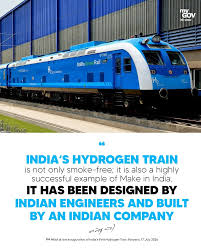
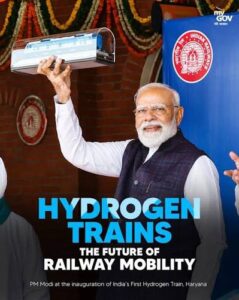
The Indian manufacturing sector has officially entered a historic new era. On July 17, 2026, Prime Minister Narendra Modi flagged off India’s first indigenous hydrogen-powered train, the “NaMo Green Rail,” from Jind, Haryana. Operating on the 90 km Jind-Sonipat route, this pioneering 10-coach train represents a monumental leap toward sustainable transportation and Indian Railways’ ambitious goal of achieving net-zero carbon emissions by 2030.

At Finsys, we are filled with immense pride.

Several of our esteemed ERP clients—tier-1 and tier-2 engineering and automotive component manufacturers—supplied the critical, high-precision parts that made this cutting-edge locomotive a reality.

We extend our heartiest congratulations to all our partner industries. Your engineering excellence, coupled with robust digital operations, has put India on the global map of green technology.

https://www.ndtv.com/travel/how-much-indias-first-hydrogen-train-ticket-costs-route-and-unique-features-you-should-know-11783392


The Technological Marvel: What Makes the NaMo Green Rail Historic?

Unlike traditional diesel locomotives or standard electric trains, the hydrogen train relies on an advanced chemical reaction combining compressed hydrogen and oxygen within fuel cells. This process generates electricity to power the train while emitting nothing but harmless water vapor and heat.

Key Technical Specifications of the Project:

  • Zero-Emission Blueprint: Eliminates greenhouse gas emissions entirely at the point of operation.

  • High-Capacity Engineering: Features 10 expertly designed coaches capable of carrying approximately 2,600 passengers.

  • Infrastructure Milestone: Supported by India’s largest dedicated railway hydrogen storage and refuelling facility in Jind, capable of storing nearly 3,000 kg of compressed hydrogen.

  • Inclusive Innovation: Reaches speeds of up to 75 km/h, with highly subsidized fares starting at just ₹5 to ensure eco-friendly transit is accessible to all.

Building a train that handles highly pressurized hydrogen gas, intricate electrical distribution, and stringent safety protocols required component manufacturing of the absolute highest caliber.


One of the Invisible Part of the Chain: How we at Finsys ERP Powered the Supply Chain

Manufacturing components for a breakthrough aerospace or defense-grade railway project demands flawless execution. When the margins for error are zero, standard manufacturing processes simply won’t cut it.

Our clients utilized the core strengths of the Finsys ERP System to meet the strict quality, trace, and delivery benchmarks required by Indian Railways and its integral production units.

Here is how Finsys ERP played a backstage role in this national triumph:

1. Advanced Material Traceability (Heat & Batch Control)

Hydrogen technology demands components that can withstand extreme pressures and chemical properties without risking embrittlement or structural failure. Our manufacturing clients relied heavily on the Finsys Lot & Batch Traceability Module. From the raw steel or alloy stage to the finished machined part, every item was mapped to its specific heat number, supplier certificate, and quality inspection report. In the event of a quality audit, full forward and backward traceability was available at the click of a button.

2. Micro-Precision Quality Control (QC)

The tolerance levels for valves, seals, brackets, and electrical housings used in a hydrogen fuel-cell ecosystem are exceptionally tight. Finsys ERP’s integrated Gate Entry and In-Process Quality Control (IPQC) checklists ensured that no component moved to the next stage of production—or out the shipping dock—unless it met 100% of the digital technical parameters specified by the railway design engineers.

3. Just-In-Time (JIT) Inventory & Materials Management

With production timelines closely watched by the central government, keeping supply lines moving without overstocking expensive materials was a tightrope walk. The Finsys Material Requirements Planning (MRP) engine accurately forecasted raw material requirements, helping our clients sync their procurement directly with the assembly schedules of the coach factories.

4. Flawless Engineering Change Management

Prototyping a brand-new technology inherently involves continuous design revisions. As railway engineers tweaked component blueprints to optimize safety and performance, Finsys ERP’s Bill of Materials (BOM) Version Control allowed our clients to implement engineering changes instantly across the shop floor, preventing costly scrap and production delays.


A Vision Realized: The Power of Self-Reliant India (Atmanirbhar Bharat)

The launch of the NaMo Green Rail is more than just a win for green energy; it is a definitive proof point for the Atmanirbhar Bharat (Self-Reliant India) vision. Historically, high-tech train components were heavily imported. Today, local MSMEs and large enterprise manufacturers in industrial hubs like Haryana, Punjab, and Delhi-NCR are engineering these complex components domestically.

Finsys has spent over three decades empowering Indian MSMEs to transition from manual, unorganized workshops into world-class, digitally-driven smart factories. Seeing our clients leverage our ERP platform to successfully supply parts for a pioneering, world-first-tier green project is the ultimate validation of our mission.


To Our Clients: The Journey Ahead

The Jind-Sonipat route is just the beginning. Indian Railways plans to expand hydrogen-powered operations across multiple scenic and rural routes, meaning the demand for hydrogen-compatible infrastructure and rolling stock parts will skyrocket in the coming years.

To our clients who contributed to this first prototype: you now hold a distinct first-mover advantage. The data frameworks, quality standards, and production workflows you built and perfected within your Finsys ERP environment have prepared you to scale this production seamlessly as the green rail network expands across the nation.

We are incredibly proud to be the digital spine supporting your manufacturing facilities. As you continue to innovate, engineer, and build the physical assets of a modern, sustainable India, Finsys vows to continue innovating the digital tools you need to optimize costs, enhance productivity, and maintain global quality standards.

“Behind every successful green machine is an optimized supply chain, a dedicated team of engineers, and a robust ERP system keeping the wheels turning. Congratulations to our clients for engineering change, one precise component at a time!”

— The Finsys Team


About Finsys Infotech Limited

Finsys is a premier provider of enterprise resource planning (ERP) software tailored specifically for the agile needs of the Indian manufacturing sector. Specializing in automotive components, engineering, plastics, chemicals, and electronics, Finsys ERP helps businesses streamline production, automate inventory, enforce stringent quality control, and maintain total financial visibility.

Discover how Finsys can elevate your factory’s operational efficiency and prepare your business for prestigious national and global supply contracts.

Contact a Finsys ERP Expert Today

Glass Manufacturer in Punjab Partners with Finsys ERP for Digital Transformation

Forward-Thinking Glass Manufacturer in Punjab, Selects Finsys ERP

Finsys ERP has been selected by a progressive glass manufacturing company based in Punjab for comprehensive digital transformation. This engagement reinforces the growing confidence that innovative glass manufacturers across India place in Finsys—a robust, manufacturing-focused ERP specifically built to handle real shop floor complexity, precision production demands, and quality-conscious customers requiring consistency and reliability.

The new customer operates in the specialized glass manufacturing space, producing a wide range of glass products including bottles, containers, flat glass, and custom glassware for beverage, pharmaceutical, food, and industrial sectors. As their business scales rapidly, reliance on spreadsheets and fragmented systems has become a major bottleneck for production monitoring, inventory control, dispatch efficiency, and accurate management reporting.

Punjab’s Strong Glass Manufacturing Sector

Punjab has established itself as a significant hub for glass manufacturing in India, with a strong presence of glass container manufacturers, bottle makers, and flat glass producers. The state’s industrial infrastructure, skilled workforce, and proximity to key markets make it a strategic location for glass manufacturing units looking to expand operations.

This new customer is a growth-focused glass manufacturing unit supplying high-quality glass products to prominent beverage companies, pharmaceutical manufacturers, food processors, and industrial clients. Their production capabilities span multiple product lines including colored and clear glass bottles, pharmaceutical vials, food jars, and customized glass containers designed to meet specific customer requirements.

In this precision-driven industry, quality consistency, on-time delivery, and cost control directly impact margins and customer retention. To achieve operational excellence, manufacturing operations need tight coordination with complete visibility from raw material procurement through final dispatch.

The Core Challenges

Glass manufacturing is a capital-intensive, process-oriented industry facing unique operational challenges:

  • Batch Production Complexity – Managing multiple glass batches simultaneously with different compositions, colors, and specifications
  • Real-time Monitoring Gaps – Lack of visibility into furnace operations, molding, annealing, and quality status
  • Inventory Management – Difficulty tracking raw materials (silica sand, soda ash, lime) and managing finished goods across multiple product lines
  • Quality Consistency – Manual quality checks without complete traceability from batch to finished product
  • Delivery Pressure – Difficulty meeting tight OTIF commitments without integrated production and dispatch planning
  • Cost Control – Inability to track manufacturing costs accurately by product, batch, and customer

Why Finsys ERP Was Selected

Finsys ERP has successfully powered multiple glass manufacturing operations, including bottle manufacturers, container producers, and specialty glass units. It is recognized for its capability to handle complex, process-oriented manufacturing with batch tracking, multi-stage production control, detailed material management, and stringent quality compliance.

The Punjab customer evaluated Finsys ERP on three critical dimensions:

Industry Expertise – Proven depth in glass and process manufacturing with understanding of batch production, furnace operations, and quality requirements specific to glass making.

Implementation Track Record – Demonstrated success in similar glass manufacturing plants across India with quick time-to-value and minimal production disruption.

Scalability & Roadmap – A system that grows with business needs, supports new product lines, and maintains compliance with glass industry standards and quality regulations.

Finsys ERP delivered on all three fronts: a comprehensive solution deployable in a structured manner, with strong post-implementation support and the flexibility to accommodate production expansion and new product development.

Implementation Scope

Sales and Order Management

  • Enquiry tracking and quotation management for different glass product categories
  • Order entry with detailed specifications: glass color, thickness, finish, quantity, delivery timeline
  • Real-time order status visibility for sales, customer service, and production planning teams

Production Planning and Shop Floor Control

  • Batch-wise production scheduling with furnace capacity planning
  • Real-time monitoring of molding, annealing, and finishing processes
  • Work order generation and WIP (Work in Progress) tracking across production lines
  • Support for multiple product variants with different specifications
  • Daily production dashboards showing throughput, yield rates, and quality metrics

Raw Material and Inventory Management

  • Automated Material Requirement Planning (MRP) for glass batch materials: silica sand, soda ash, lime, colorants, additives
  • Supplier management and procurement tracking for raw materials
  • Batch-level and location-based inventory control to optimize stock levels
  • Waste and breakage tracking with batch-wise yield analysis

Quality Management and Compliance

  • Quality checkpoints integrated at molding, annealing, and inspection stages
  • Batch and order-level traceability for complete quality audit trails
  • Automated quality alerts for deviations in specifications (thickness, color, clarity)
  • Integration with glass industry quality standards and certifications

Logistics, Dispatch, and OTIF Excellence

  • Integrated dispatch planning with automatic shipping documentation
  • Order fulfillment tracking against on-time, in-full (OTIF) commitments
  • Real-time shipment tracking and delivery confirmation
  • Seamless integration with accounts for accurate billing

Finance and Accounts Integration

  • Real-time operational data flowing into financial accounting
  • Manufacturing cost tracking by product, batch, and production line
  • Costing analysis with contribution margin insights by customer and product
  • Statutory compliance and GST-ready invoicing

Strengthening Finsys Position in Glass Manufacturing

With this new implementation, Finsys reinforces its position as the preferred ERP partner for glass and process manufacturing industries across India. Our team is fully committed to a smooth, phased implementation that delivers rapid benefits and establishes a strong, data-driven foundation for sustained growth.

Finsys ERP continues to empower ambitious glass manufacturers and process-oriented industries, guiding them from scattered systems to an integrated digital backbone that drives operational excellence, quality consistency, and profitability.

Useful Links

ERP for Electroplating & Surface Finishing Success | Finsys

New Order Milestone: Premier Industrial Coating Specialist Picks Finsys ERP

Finsys ERP has been selected by another industrial electroplating and metal coating specialist. This marks a new milestone in digital transformation.

This project reinforces confidence in Finsys Infotech Limited. High-precision manufacturing units trust us. Why? Because Finsys ERP is built for:

  • Real shopfloor complexity

  • Strict quality parameters

  • High-volume Tier-1 OEM delivery commitments


Mastering High-Performance Surface Finishing

The new client is an ISO 9001:2015 certified market leader. They have over 20 years of electroplating excellence.

They provide precision-engineered surface finishing solutions:

  • Alkaline Zinc electroplating

  • Zinc-Nickel electroplating

  • Zinc-Iron electroplating (Rack and Barrel)

  • Cathodic Epoxy Coating (CED)

  • Electrostatic Powder Coating

Their production lines support hundreds of part varieties. They serve automotive giants like Maruti Suzuki and Honda.

Manual tracking through disconnected systems creates bottlenecks. As business scales, challenges grow:

  • Multi-tier customer schedules

  • Chemical bath parameters

  • In-process quality audits

  • Job-wise yield optimization

You need a synchronized digital backbone.

With Finsys ERP, management integrates all core functions into one platform:

  1. Sales Order & Schedule Management

  2. Production Planning & Control (PPC)

  3. Procurement & Raw Material Tracking (Anodes, Chemicals, Components)

  4. In-process & Final Quality Control (QC)

  5. Inventory & Tooling Control

  6. Finance, GST Compliance, and Executive Dashboards


Why Leading Electroplating Units Choose Finsys ERP

Surface finishing plants operate with tight margins. They face strict chemical control regulations. OEM delivery windows are demanding.

The client evaluated Finsys on three key aspects:

  1. Industry fit

  2. Proven implementation experience

  3. Long-term scalability

Unlike generic accounting software, Finsys provides a specialized ERP for Auto Components. It understands real shopfloor realities:

  • Operation-wise routing

  • Chemical consumption tracking

  • Scrap management

  • Batch-wise material traceabilityImprove Performance and Manage Growth


1. Operational Benefits & Real-Time Shopfloor Visibility

Machine & Line-Wise Planning: Advanced production scheduling for automated Rack and Barrel lines. This maximizes capacity utilization. It avoids line stoppages.

WIP Stage-Wise Tracking: Get complete visibility over items. Track from raw cleaning to plating, baking, and final finishing layers.

Reduced Manual Dependency: Shift from fragmented spreadsheets. Use automated, system-dependent workflows instead. This enhances inter-departmental coordination.


2. Strict Quality Control & Gate-to-Gate Traceability

System-Dependent QC Audits: Move away from manual checklists. Use structured line patrols instead. Maintain chemical bath analysis logs. Conduct pre-dispatch inspections (PDI).

Batch-Wise Traceability: Map finished components to specific material receipts. Track chemical batches and process parameters. This is critical for Tier-1 OEM audits.

Material Yield & Scrap Optimization: Track chemical and metal consumption accurately. Compare against standard surface area calculations. Proactively reduce wastage. Identify process discrepancies quickly.


3. Commercial & Strategic Advantages

Precise Job Costing: Get faster profitability analysis. Analyze by item, customer, and coating type. Ensure commercial choices align with shopfloor expenses.

Automated OEM Schedules: Handle high-frequency delivery schedules seamlessly. Reduce lead times. Ensure on-time delivery metrics.

Management Dashboards: Senior leadership gets a 360-degree view of business health. Access securely via mobile (iOS and Android). Get real-time approvals. Make strategic decisions faster.


Strengthening Finsys Presence in Precision Manufacturing

With this new order, Finsys Infotech Limited solidifies its position. We are the preferred ERP partner across major industrial corridors.

We boost operations in these vital hubs:

Finsys converts shopfloor complexity into clean, boardroom-grade analytics. We empower Indian manufacturers to meet global quality standards efficiently.


Ready to Eliminate Manual Tracking Bottlenecks?

Discover how Oracle-backed, ready-to-use manufacturing templates from Finsys can transform your facility.

Contact Our Team Today to schedule a live, personalized demo tailored to your industry requirements.