











Finsys ERP is proud to be associated with Printweek

Corrugation Special in July issue of PrintWeek : Finsys
The July 2026 issue of PrintWeek takes a peek into the eight-million MT corrugation market in India.
Writing the editorial for the Corrugation Special, which is the highlight of the issue, Rahul Kumar of PrintWeek writes, “India is witnessing unprecedented demand for corrugated packaging. Every online order, pharmaceutical shipment, fresh produce consignment, industrial component, or consumer electronics product requires reliable and sustainable packaging. Government initiatives such as Make in India, Production Linked Incentive (PLI) schemes, rising exports, and improved logistics infrastructure are further accelerating the demand for high-performance corrugated packaging. Unlike mature markets, India still has significant headroom for growth. As manufacturing expands and organised retail penetrates deeper into tier-II and tier-III cities, corrugated packaging consumption is expected to rise steadily. The future of the industry is being driven by multiple high-growth industries simultaneously.”
A sector that spent decades in the shadows of small-scale reservation is now navigating the turbulence of overcapacity, Chinese dominance, and thin margins. Yet pockets of manufacturing are quietly redefining what is possible. Manish Patel of SIPM shares his expert opinion in The Big Read section.
To the insider, the corrugated packaging landscape reveals a complex architecture, a sector in the midst of a profound structural transformation, writes Pankaj Shah of Supack International.
Rahul Kumar visits Lucknow-based Amber Packagers, where managing director Wafa Abbas explains why automation, quality and disciplined investment are shaping the company’s next phase of growth.
Volatility in kraft paper prices is a challenge. It has a direct impact on manufacturing costs and profitability, say Anantha Shayana and Pramod Shayana of Best Corrugators, in an interview with Rahul Kumar
At Corrucase, the goal is to become a packaging partner rather than just a packaging converter, says Ayush Khetan, director, Corrucase, in an interview with Rahul Kumar.
Timely maintenance of all machines and keeping them in top-notch working condition is necessary to improve the efficiency of the production process, Navin Kumar Motani of Vaishali, Hajipur-based Excel Paper Packaging, tells Rahul Kumar.
To build a globally competitive, future-ready corrugated packaging plant today, your capital allocation must shift away from traditional metrics and focus on agility, intelligence, and circular compliance, Pradeep Arya of Kamrup Packaging Udyog, tells Rahul Kumar
Arundas CH, managing director, Kapstone Industries, tells Rahul Kumar how the company is gradually adopting digital data collection and performance monitoring, enabling better decision-making through real-time production insights.
Meerut-based Vandana Packaging’s investment philosophy is simple. It invests in technology that will continue delivering value even after ten or fifteen years, Ashish Goel, director, Vandana Packaging, tells Rahul Kumar.
The future of corrugation lies in automation, advanced screening, AI-driven workflows and high-performance plate technologies, say Raghav Madan and Sudhir Arora, managing partners at Alpha Flex, in a conversation with Rahul Kumar.
The future belongs to converters who adopt a holistic approach towards print quality. High-quality corrugated printing is no longer determined by the printing plate alone; it is the result of optimising the entire print ecosystem, says Muralidhar Nalli, CEO, Digiflex, a flexographic pre-press solutions provider, in a conversation with Rahul Kumar.
Making sure your existing presses are perfectly calibrated — with consistent target densities and clear dot gain curves — allows your pre-press partner to engineer plates that work flawlessly on the first pass, cutting out costly adjustments on the floor, says Kaveri Satija of Devi Graphics, in an interview with Rahul Kumar.
Digital workflow improves quality and automation and avoids mistakes, which happens with manual interference, says S Giridharan, executive director, Kapoor Imaging, in an interview with Rahul Kumar.
By implementing standardised plate-making procedures, colour management practices, and press optimisation techniques, converters can significantly improve quality consistency while reducing waste and downtime, says Prasenjit Das, general manager, XSYS South Asia, in an interview with Rahul Kumar.
After decades of investing in faster machines, India’s corrugated box industry is turning its attention to something less visible but equally important: information. Sangeet Gupta and Puneet Guptaof Faridabad-based Finsys ERP Software, explain why operational discipline is becoming the sector’s most valuable asset.
ERP is a strategic investment, not an expense, Manish Madhusudan, co-founder, Renuka Softtec, tells Rahul Kumar.
Vivek Mukherjee, manager marketing, Samadhan, explains how Microsoft Dynamics 365 Business Central connects finance, sales, purchasing, inventory, warehousing, manufacturing, and customer service into a single platform, and how Samadhan brings corrugation expertise and industry best practices.
In corrugation business you can address up to a distance of 300-km or sometimes even less, and just-in-time delivery is the essence of the game, says Venugopal Menon of Bobst in a conversation with Rahul Kumar.
Bijendra Sharma, managing director, BHS Corrugated India, shares his views on industry growth, automation, AI, sustainability, customer profitability, and why India’s corrugators must focus on technology and process excellence to remain competitive, in an interaction with Rahul Kumar.
As packaging manufacturers face increasing pressure to improve productivity, advanced machinery and process optimisation have become critical. Veena Ajay, business development head, Boxtech Bengaluru, shares her insights.
The most sustainable manufacturing process is one that minimises waste, optimises resource utilisation, and maximises output quality, say Chandrashekhar Dhote and Kapil Dev, directors, Druckncut India in an interview with Rahul Kumar.
In this exclusive writeup, Chiranjeevi Sastry, sales director, Emba Machinery, shares a first-hand experience on the evolution of the Indian corrugation industry.
The future is a PLC-controlled, sensor-driven machine that takes a design file and prints it with zero manual setup, says Riddhi Shah of Printpack Engineers. She tells Rahul Kumar that, “In our experience, the cheapest option is rarely the most economical one. A supplier who’s honest about what a price can deliver is worth more than one who agrees to everything”.
Digital cutting tables minimise production errors, reduce rework, and lower material consumption, Puranjit Sarangi of TechNova Imaging Systems, tells Rahul Kumar.
Digital cutting tables have enabled economical short-run productions and rapid prototyping, says Prasanna Venkatesh of Zund India, in an interview with Rahul Kumar.
Corrugators need to focus on the long-term return on investment and the actual running costs rather than just the initial price tag, says Kunal Gandhi of CGSASP, in an interview with Rahul Kumar.
For short-run production of packaging solutions, digital cutting tables can facilitate the requirement, Brijesh Puri, founder, Packnology tells Rahul Kumar.
Anupam Agarwal of Amity Paper & Board says the fundamental question facing the industry is whether it can transition from a volume-driven business to a value-driven ecosystem focused on performance, innovation, sustainability, and global competitiveness. The answer to this question will determine the future trajectory of the Indian corrugation industry.
The brown box, the workhorse of the global supply chain, is at a breaking point in India, and battle lines are drawn between old-guard manufacturers, nimble innovators, and a flood of Chinese kit. Prabhat Prakash writes.
In other features, KS Ramesh of Redington in conversation during a visit to the new and upgraded Redington Centre of Excellence for Digital Printing Solutions in Chennai, explains how the centre is being used to develop applications, train operators, support print businesses and help brands to package their products.
These and other regular features in the July 2026 issue of PrintWeek.
For Orginal content, read your Printed copy of Printweek ..
Some headlines at https://www.printweek.in/article/corrugation-special-in-july-issue-of-printweek/4ntsrmm2vc7kazzw9aj6p2zdd5

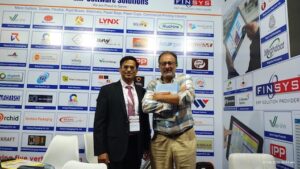
Finsys ERP, in the service of the Indian Packaging Industry… and the Corrugation Packaging Industry worldwide